They say the best way to predict the future is to invent it. Here is how the future will be invented as seen from the lens of Exoplanetology. The list below can be treated as a roadmap for those involved. It can also be considered as a hopeful glimpse of what is to come.
1) Deluge of Exoplanets - between 60 to 80 new exoplanets within 2009 will be discovered. Last year's forecast of 60+ new exoplanets for 2008 came true. Yet again, there is no reason why this year's planet-hunt won't be as exciting as last year.
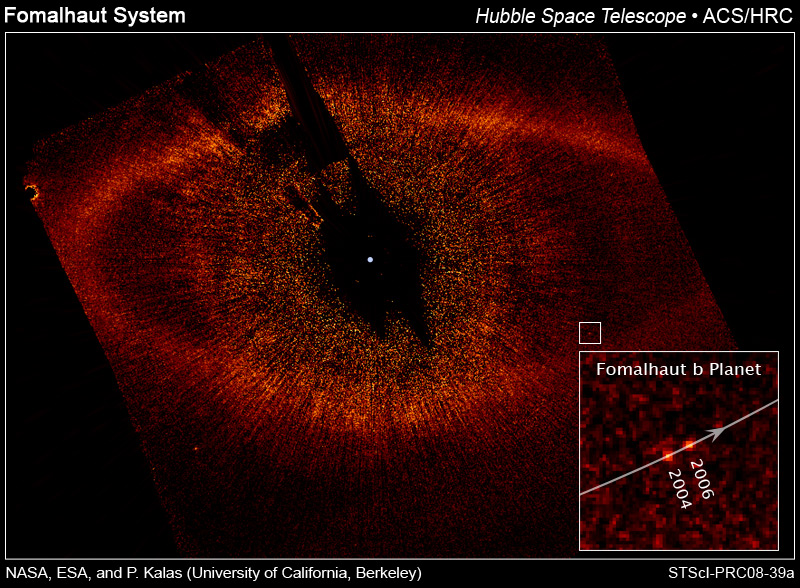
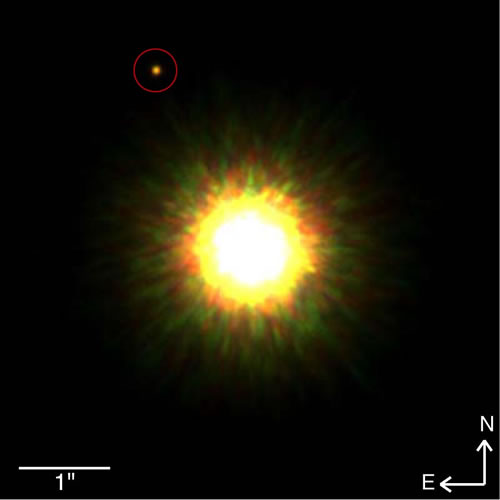
2) New Eyes - The development of new generation telescopes (both space-based and land-based) will continue from this year onwards to bring unprecedented new discoveries. See this list of telescopes to see astronomy's new arsenal, which includes Kepler, Terrestrial Planet Finder (TPF), James Webb Telescope, Spitzer Telescope, New Worlds Mission, and Space Interferometry Mission (SIM). Although direct imaging technique will continue to make waves in the news, transit method will continue to pile up new exoplanet discoveries. The power of a new set of eyes will set the stage for amazing things that is to come.
3) New Brains - data gathered by some new generation telescopes will gradually be opened up for public consumption starting in 2010 or 2011. Number-crunchers, algorithms and software will sift through terabytes and petabytes of collected data to discover new planets by way of numbers, statistics, and computation. Candidates for "habitables", exoplanets that lie inside the habitable zone (HZ), will be filtered from massive amounts of data, helping telescopes identify good interesting targets.
More powerful but cheaper computers, with dual core or multiple core set up in parallel, will enable more detailed simulations of planet-formations and alien solar systems, providing better insights for exoplanet science.
4) Amateur Boom - Amateur exoplanetology will explode. Projects similar to Systemic, SETI@home (or their mashup) will enable amateurs to contribute to science. Crowdsourcing, baby! Or call it Amateursourcing!
Cheaper and more powerful telescopes, and affordable CCDs for differential photometry will enable amateur astronomers to discover new exoplanets, a la do-it-yourself (DIY) exoplanet-hunting. This will take off, possibly going mainstream in amateur astronomy sometime in 2010 or 2011 onwards.
5) Signs of life - More signs of life beginning in 2010-ish. More organic clues detected in atmosphere of exoplanets. Strong evidence will continue to mount, pointing to the ever-growing possibility of extra-terrestrial life.
6) Superdupers - More Super-Earth detections will become more common starting in 2011 or 2014. "Habitables" or "Habs" will pour in. Water-worlds will flood the news.
7) Exotics - Exomoon detection capability takes off in 2012 to 2014. New exotic discoveries will also start to pour in. Classifying celestial objects becomes even more challenging for astronomers. Imagine earth-sized exomoons with their own moons! What will you call them? Exomoonoids?
8) Earth Galore - More and more Habs and earth-like planets in habitable zones between 2015 to 2020 will pour in. Advances in technology and planet-hunting methods will enable us to resolve exoplanets the size of earth and smaller. There will then be more than a thousand total exoplanets in the list. Direct-imaging methods will be in greater demand as ever.
9) Shockwave - Mankind will be thrown in a theological and religious turmoil. A period of adjustments in worldviews will occur as mankind tries to make sense of their being amidst the impending discovery of another earth with life.
Spiritual individuals have no problems with it whatsoever. But Religions will start to revise old beliefs and begin re-interpreting scriptures to prepare for the ramifications of the discovery of...
10) Life - Scientific confirmation of exo-life happens between 2020 to 2030-ish. Astrobiologists will finally confirm that life exists on another planet of another star. It may not be in an earth-like exoplanet at all, perhaps not even in a planet, and may not even be life-like. It is something so incredible that no one has ever predicted.